
How Biomass Pellets Are Helping Industries Reduce Fossil Fuel Dependence
Introduction
Industries around the world rely heavily on energy for manufacturing, heating, drying, steam generation, and other production processes. Traditionally, many of these operations have depended on fossil fuels such as coal, furnace oil, diesel, and natural gas.
As businesses face increasing pressure to improve energy efficiency, manage fuel costs, reduce emissions, and adopt more sustainable practices, biomass pellets are emerging as an alternative renewable fuel for suitable industrial applications.
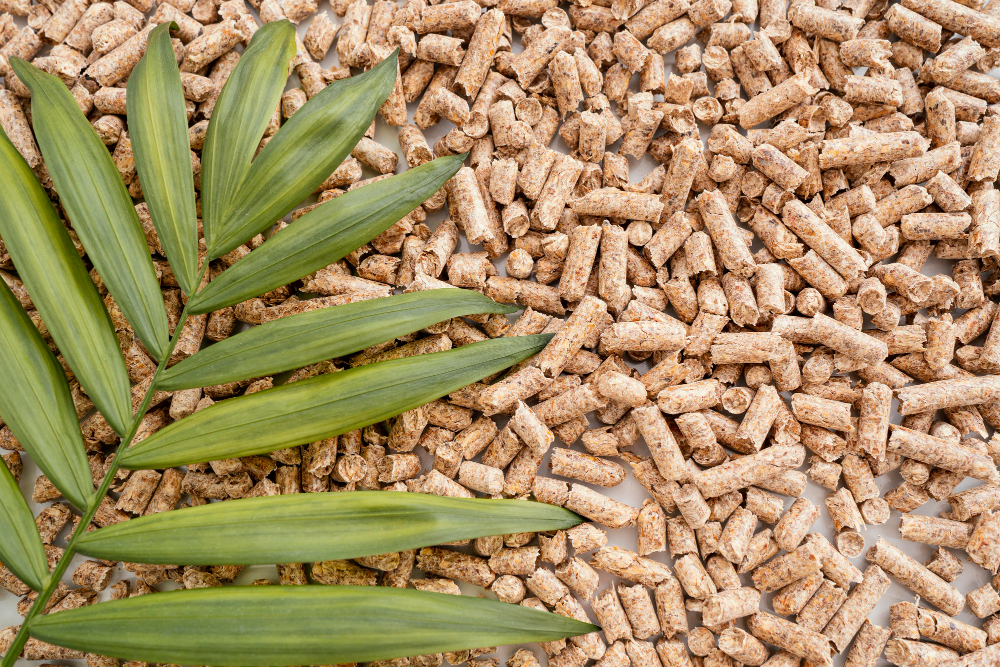
Biomass pellets are produced by compressing organic materials such as agricultural residues, wood-processing waste, sawdust, and other suitable biomass into a compact and standardized fuel. Their consistent size and relatively high bulk density make them easier to transport, store, and feed into appropriately designed combustion systems.
The important question is not whether biomass pellets can replace every fossil fuel application—they cannot. Instead, their greatest opportunity is in industrial thermal applications where suitable biomass fuel and compatible equipment are available.
How Biomass Pellets Reduce Fossil Fuel Use
Biomass pellets can replace or supplement fossil fuels in compatible industrial heating systems.
The basic concept is:
Biomass residue → Pellet production → Industrial combustion → Heat/Steam → Manufacturing process
Instead of purchasing all of the energy required for a thermal process from coal, oil, or gas, an industrial facility can use biomass pellets for some or all of its suitable thermal requirements.
The actual replacement percentage depends on:
- Boiler design
- Combustion technology
- Fuel quality
- Required temperature
- Existing infrastructure
- Pellet availability
- Local regulations
- Industrial process requirements
What Are the Challenges?
Biomass pellets can reduce fossil-fuel dependence, but switching is not as simple as replacing one fuel with another.
1. Equipment Compatibility
Existing boilers may require modifications or replacement.
2. Fuel Quality
Pellets with excessive moisture or ash can affect combustion performance and equipment operation.
3. Supply Reliability
Industries requiring continuous fuel supply need dependable pellet suppliers and logistics.
4. Storage Requirements
Pellets need appropriate protection against moisture.
5. Transportation
If pellets are transported over long distances, logistics can increase both cost and environmental impact.
6. Seasonal Biomass Availability
Agricultural residues may be available primarily during particular harvesting periods.
7. Sustainability
Not every biomass source is equally sustainable. Responsible sourcing and lifecycle assessment are essential.
How Can an Industry Switch to Biomass Pellets?
A practical transition can follow several steps.
Step 1: Analyze Current Fuel Consumption
Determine how much coal, oil, gas or another fossil fuel the facility currently uses.
Step 2: Identify Thermal Requirements
Understand:
- Required temperature
- Steam pressure
- Heat demand
- Operating hours
- Peak demand
Step 3: Evaluate Pellet Availability
Check whether consistent quantities of suitable pellets are available locally or regionally.
Step 4: Test Fuel Quality
Evaluate:
- Moisture
- Ash
- Calorific value
- Density
- Durability
Step 5: Assess Equipment
Determine whether the existing boiler or heating system can use biomass pellets and whether modifications are required.
Step 6: Conduct an Economic Analysis
Compare the total cost of the existing fuel with the expected cost of biomass energy.
Step 7: Start With a Controlled Transition
Rather than making an immediate full conversion, some facilities may begin with partial fuel substitution or pilot-scale testing.
Step 8: Monitor Performance
Track:
- Fuel consumption
- Heat output
- Efficiency
- Maintenance
- Emissions
- Operating cost
This data helps determine whether the transition is commercially and technically successful.