
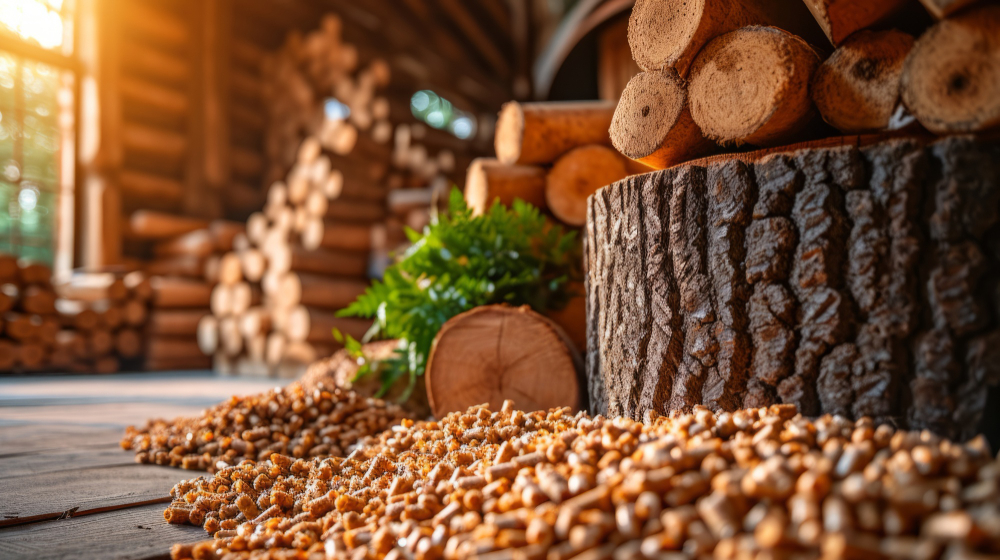
How Biomass Pellets Are Manufactured: From Raw Material to Finished Fuel
Introduction
Biomass pellets are a renewable solid fuel produced by converting suitable organic materials into compact, dense and standardized fuel units. They are commonly manufactured from agricultural residues, forestry residues, sawdust, wood-processing waste and other suitable biomass materials.
The manufacturing process is more than simply compressing raw material. Feedstock selection, cleaning, size reduction, moisture control, pelletization, cooling, screening and storage all influence the quality and performance of the final product.
A well-designed pellet production process helps transform low-density biomass residues into a fuel that is easier to handle, transport, store and feed into compatible boilers and energy systems.
The basic manufacturing journey can be summarized as:
Raw Biomass → Cleaning → Chipping/Grinding → Drying → Conditioning → Pelletizing → Cooling → Screening → Packaging → Finished Biomass Pellets
What Are Biomass Pellets Made From?
The first step in manufacturing is selecting suitable raw materials.
Depending on the intended application and local availability, biomass pellets may be manufactured from:
- Sawdust
- Wood chips
- Forestry residues
- Rice husk
- Wheat straw
- Corn residues
- Mustard stalks
- Sugarcane residues
- Groundnut shells
- Cotton residues
- Agricultural processing waste
- Other suitable plant-based residues
The choice of feedstock has a major influence on the final pellet’s calorific value, ash content, durability, moisture requirements and combustion characteristics.
For industrial applications, consistency of raw material is particularly important.
Step 1: Collection of Raw Biomass
The process begins with collecting biomass from agricultural, forestry or industrial sources.
For agricultural pellets, residues can come from farms and agricultural-processing facilities.
For wood-based pellets, raw material may come from sawmills, woodworking operations and forestry residues.
The objective is to establish a consistent and reliable feedstock supply.
A pellet plant needs sufficient raw material throughout its operating period, so sourcing and logistics are important parts of the manufacturing operation.
Step 2: Sorting and Cleaning
Raw biomass may contain unwanted materials such as:
- Stones
- Soil
- Metal
- Plastic
- Sand
- Other foreign materials
These contaminants need to be removed before further processing.
Cleaning protects machinery and helps maintain the quality of the finished pellets.
Magnetic separators, screens and other cleaning equipment may be used depending on the feedstock.
Step 3: Chipping and Size Reduction
Large pieces of biomass cannot normally be fed directly into a pellet mill.
The material is therefore reduced in size using equipment such as:
- Chippers
- Shredders
- Hammer mills
- Grinders
The objective is to produce particles with a suitable size distribution for drying and pelletization.
Consistent particle size can help create more uniform pellets and improve the stability of the production process.
Step 4: Drying the Biomass
Moisture is one of the most important factors in pellet production.
Fresh biomass can contain too much moisture for efficient pelletization.
Excess moisture can affect:
- Pellet durability
- Energy density
- Combustion
- Storage stability
- Production efficiency
Therefore, the material may be passed through an industrial dryer before pelletization.
The required moisture level depends on the feedstock and production system, so manufacturers generally control moisture rather than applying one universal number to every biomass type.
Step 5: Conditioning the Feedstock
Before entering the pellet mill, the biomass may undergo conditioning.
Depending on the feedstock and pellet specification, this can involve:
- Moisture adjustment
- Steam conditioning
- Mixing different biomass materials
- Temperature control
Conditioning helps prepare the material for compression.
The natural binding properties of biomass—particularly lignin in many woody materials—can help particles bind together during pelletization.
Step 6: Pelletization
This is the central stage of biomass pellet manufacturing.
The prepared biomass enters a pellet mill, where mechanical pressure forces the material through openings in a die.
As the biomass is compressed:
Loose biomass → High-pressure compression → Dense cylindrical pellets
The heat and pressure generated during the process help particles bind together.
The pellet mill determines much of the final pellet’s:
- Diameter
- Shape
- Density
- Length
- Mechanical durability
Different dies can be used depending on the desired pellet specifications.
Step 7: Cutting the Pellets
As compressed biomass exits through the die holes, it forms continuous strands.
A cutting mechanism breaks these strands into individual pellets.
The result is a standardized cylindrical fuel product.
Pellet dimensions depend on the production equipment and intended application.
Step 8: Cooling the Fresh Pellets
Freshly produced pellets can be relatively hot and may still contain internal stresses from the compression process.
They are therefore passed through a cooling system.
Cooling helps:
- Stabilize the pellets
- Improve handling
- Reduce temperature
- Strengthen the finished product
- Prepare pellets for storage and transportation
Industrial pellet plants commonly use dedicated pellet coolers for this purpose.
Step 9: Screening
After cooling, pellets are screened to separate:
- Fine particles
- Broken pellets
- Oversized material
- Acceptable finished pellets
The fines can often be returned to the production process.
Screening helps ensure that the finished product has more consistent physical characteristics.
Step 10: Quality Testing
Before the pellets are dispatched, manufacturers may test important properties such as:
Moisture Content
Indicates how much water remains in the pellets.
Calorific Value
Shows the amount of energy released during combustion.
Ash Content
Indicates the inorganic residue remaining after combustion.
Bulk Density
Measures the mass of pellets contained within a given volume.
Mechanical Durability
Indicates how well pellets resist breaking during handling and transportation.
Pellet Size
Consistent dimensions help ensure compatibility with automated feeding systems.
These parameters are particularly important for industrial customers because fuel consistency can influence boiler performance and operating costs.
Step 11: Storage and Packaging
Once the pellets pass quality checks, they are stored or packaged.
Depending on the scale of the operation, biomass pellets may be supplied in:
- Bags
- Bulk bags
- Bulk tankers
- Other bulk transportation systems
Storage facilities should protect pellets from excessive moisture.
Poor storage conditions can cause pellets to absorb moisture, lose mechanical integrity and become unsuitable for efficient handling.
Step 12: Transportation to the End User
The finished pellets are transported to customers such as:
- Industrial plants
- Boiler operators
- Manufacturing facilities
- Power-generation facilities
- Commercial heating users
Because pellets have a relatively standardized form and higher bulk density than loose biomass, they can be handled more conveniently through organized fuel-supply systems.
Complete Biomass Pellet Manufacturing Process
The complete process can be represented as:
1. Biomass Collection
↓
2. Sorting & Cleaning
↓
3. Chipping / Shredding
↓
4. Grinding
↓
5. Drying
↓
6. Conditioning
↓
7. Pelletization
↓
8. Cutting
↓
9. Cooling
↓
10. Screening
↓
11. Quality Testing
↓
12. Packaging / Bulk Storage
↓
13. Transportation
↓
Finished Biomass Fuel