
Biomass Pallets Guide 2026: Comprehensive Uses, Benefits, and Sustainable Energy Insights
Introduction
As industries and businesses look for cleaner and more efficient alternatives to conventional fossil fuels, biomass pellets are becoming an increasingly important source of renewable energy.
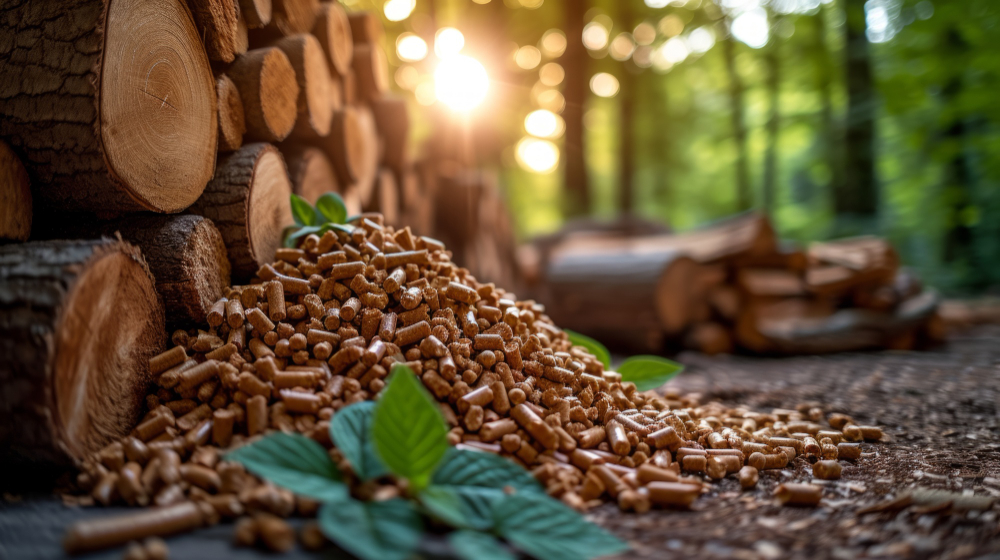
Biomass pellets are compact, standardized fuel products manufactured by compressing organic materials such as agricultural residues, forestry waste, sawdust, wood residues, rice husk, straw, bagasse and other biomass resources. Converting loose biomass into pellets makes the material easier to handle, transport, store and use in boilers and energy-generation systems.
Recent research highlights biomass pellets as a promising option for industrial heat, combined heat and power, electricity generation, gasification, co-firing and decentralized energy systems.
In India, biomass is particularly relevant because large quantities of agricultural and other residues are generated every year. The Ministry of New and Renewable Energy (MNRE) has also supported biomass pellet and briquette manufacturing as part of India’s bioenergy development framework.
But what exactly are biomass pellets, how are they produced, where are they used, and why are they becoming important in the sustainable-energy landscape?
How Are Biomass Pellets Made?
The production process generally involves several stages.
1. Biomass Collection
Raw biomass is collected from agricultural, forestry, woodworking or other suitable sources.
The quality of the final pellets depends heavily on the quality and consistency of the raw material.
2. Sorting and Cleaning
Unwanted materials such as stones, metals, soil and other contaminants are removed.
3. Size Reduction
Large biomass materials are processed through shredders or hammer mills to create particles of a suitable size.
4. Drying
Excess moisture is removed because moisture directly affects pellet quality, storage stability and combustion performance.
5. Pelletization
The prepared biomass is compressed through a pellet mill under pressure.
The combination of pressure, temperature and the natural binding properties of biomass helps form compact pellets.
6. Cooling
Freshly produced pellets can be hot after compression. They are cooled and stabilized before handling.
7. Screening and Packaging
Broken or oversized particles can be separated before the finished pellets are stored or transported.
Key Benefits of Biomass Pellets
1. Utilization of Agricultural Waste
One of the strongest advantages of biomass pellets is their ability to turn certain agricultural and industrial residues into useful fuel.
Instead of allowing suitable residues to become a disposal problem, pelletization can create a value-added energy product.
This can be particularly relevant in agricultural regions where residue management is a major challenge.
2. Renewable Fuel Source
Biomass can be renewable when the feedstock is sourced responsibly and replenished sustainably.
Unlike finite fossil resources, agricultural and forestry residues can form part of recurring biological production cycles.
However, the sustainability of biomass depends on where the material comes from, how it is harvested, transported and processed, and whether its use creates negative land-use or ecological impacts. Current research specifically cautions against treating all biomass automatically as carbon-neutral.
3. Easier Storage and Transportation
Loose agricultural residues can occupy significant volumes and can be difficult to handle.
Pelletization increases bulk density and creates a more standardized fuel.
This can make:
- Transportation easier
- Automated feeding more practical
- Storage more organized
- Handling more efficient
Research published in 2026 identifies improved transport efficiency, storage stability and combustion performance as important advantages of pelleting.
4. Reduced Dependence on Fossil Fuels
Biomass pellets can replace or partially replace conventional fuels in appropriate applications.
Depending on the system, pellets may reduce dependence on:
- Coal
- Furnace oil
- Other fossil-based heating fuels
The actual environmental and economic benefit depends on fuel quality, equipment efficiency, transportation distance and the complete supply chain.
5. Supports Circular Economy
Biomass pellet production fits well into a circular-economy approach.
A simplified cycle looks like:
Agricultural/forestry residue → Processing → Pellet production → Energy generation → Ash/residue management
Instead of treating biomass residues only as waste, they can become inputs for another productive process.
Environmental Benefits
The environmental case for biomass pellets is strongest when they are produced from sustainably sourced waste and residues.
Potential environmental advantages include:
- Reduced open burning of suitable agricultural residues
- Lower dependence on fossil fuels
- Productive use of biomass waste
- Potential reduction in lifecycle greenhouse-gas emissions
- Support for renewable-energy targets
- Reduced waste-disposal pressure
Recent research notes that waste-derived pellets can provide significant lifecycle emissions advantages compared with fossil fuels, although the actual result depends on feedstock sourcing, processing and logistics.
Biomass Pellets and India’s Energy Transition
India has substantial biomass resources, particularly from agricultural and forestry residues.
The Government of India has identified biomass as an energy resource that can be used for heat, electricity, briquettes and pellets. A 2024 Ministry of New and Renewable Energy release estimated annual biomass production at around 750 million tonnes, including approximately 228 million tonnes of surplus biomass.
India is also exploring biomass co-firing as part of efforts to reduce coal consumption and address agricultural-residue management.
As of February 2026, the Indian government reported that biomass co-firing in thermal power plants had prevented approximately 5.7 million metric tonnes of CO₂ emissions since its introduction in FY 2019–20, according to data cited by the Ministry of New and Renewable Energy.
This makes biomass pellets particularly relevant to India’s broader goals around renewable energy, waste utilization and industrial decarbonization.